September 16, 2026
A tea station is not a shelf full of pretty tins. It is the small stretch of counter where the kettle lives, the strainer drips, and the mug you reach for every morning waits for you. Get it right and making a cup takes ninety seconds without opening a single drawer. Get it wrong and you are shifting three boxes of tea to find the infuser basket you swore you put away last night.
The encouraging part: a beginner's station needs very little within arm's reach. Everything else can live somewhere else. Here is how to decide which is which.
Choose the Spot Before You Buy Anything
Start with placement, because the best equipment in the wrong corner becomes clutter. Look for roughly 18 to 24 inches of counter near an outlet, out of the splash zone of the sink and away from the stove, where steam and grease settle on everything. If morning light hits the surface directly, fine for the kettle, less fine for anything storing tea.
No free counter? A rolling cart beside the fridge, a deep drawer with a pull-out tray, or the top of a low bookcase in the dining room all work. What matters is the sequence: fill the kettle, set down the mug, open the tin, steep, empty the leaves. If two steps in that chain send you across the kitchen, the station will quietly stop being used.
What Earns Permanent Counter Space
Keep the surface honest. These items handle almost every cup you will make:
- The kettle. An electric one with temperature settings helps if you drink green, white, or oolong tea, which prefer cooler water than boiling.
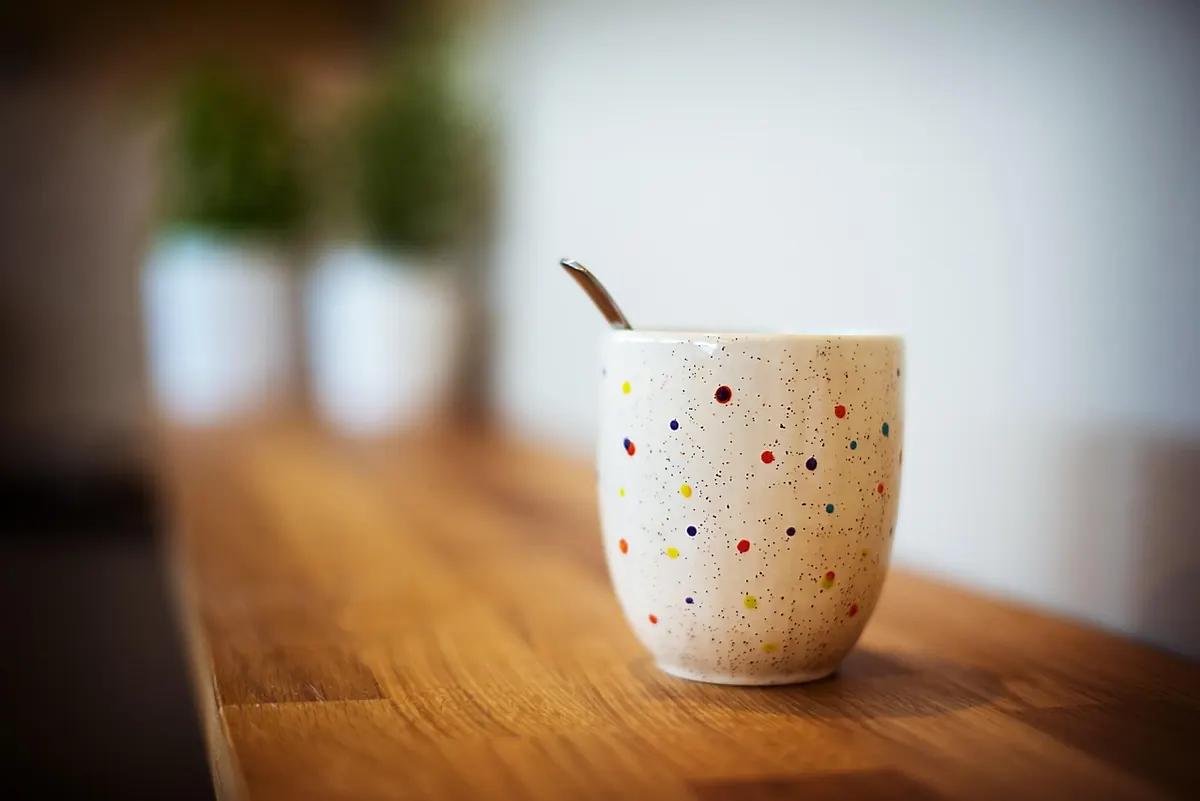
- One or two mugs. Not the whole collection. The ones you actually reach for.
- A strainer or infuser basket. One that fits your mug and rinses clean in seconds.
- One open tin of your most-drunk tea. Just one. The rest stays closed.
- A scoop or spoon, kept with the tea rather than hunted for in a drawer.
- A small saucer or spoon rest for the wet strainer. This single item prevents most counter mess.
- A timer, or your phone, so you are not guessing at steep times.
The One-Touch Test
When you are unsure where something belongs, ask how often you use it. Used most days: counter, front and center. Used weekly: open shelf, drawer, or cabinet at eye level. Used monthly or only in one season: storage, off the station entirely. This one rule resolves nearly every "where does this go" argument a tea collection creates.
What Deserves to Be Displayed
Display takes maintenance. Open shelves collect dust and light, and both are unkind to tea. Light, heat, moisture, and nearby smells all dull the flavor of leaves, which is why the tea itself usually belongs in an airtight, opaque container rather than a decorative glass jar on a sunny shelf. If you love seeing your tea, fill a small jar with about a week's worth and refill it from the main supply.
Display the tools instead. A teapot, two nice cups, a strainer, and a small tray can look intentional on an open shelf without asking much of you. Keep it to three to five objects per shelf, and rotate rather than accumulate. A tray does quiet work here: it turns five small objects into one visual unit, and you can lift the whole thing to wipe underneath.
What to Store Away, and Where
Most of a tea collection is backstock, and backstock belongs out of sight:
- Extra tea in sealed tins or bags, in a cool, dark cupboard away from the stove and dishwasher.
- Bulk boxes of tea bags. Decant a week or two into a small jar and store the rest.
- Seasonal items: the iced tea pitcher, the matcha whisk and bowl, holiday mugs.
- Duplicates and gift sets you are keeping but rarely use.
- Occasional teaware: a gaiwan, a cast iron pot, a tea tray for guests.
Two storage habits matter more than containers. First, keep tea away from coffee, spices, onions, and anything else with a strong smell, because leaves absorb odors over time. Second, label what you store with the month and year you bought it, so you drink the older tin before opening a new one. A quick sniff and taste tells you more about whether a tea still has life than any date on a box.
Containers: Buy Fewer Than You Think
A matching canister set looks appealing and usually ends up half empty, taking up shelf space to hold two bags of tea. What actually helps is unglamorous: two or three airtight tins in a size you will fill completely, one small lidded jar for the current week's tea, a shallow basket or divider for tea bags, and a tray for the tools. Buy a container for a job you already have, not for a collection you might build.
Skip the twelve-mug tree, the spoon rack, and the wall-mounted organizer that holds nine boxes of tea. Each one adds a surface to dust and a place for things to hide.
The Five-Minute Reset
Once a week, do this in order: empty and rinse the strainer, wipe the tray and counter, return any stray mugs to the cupboard, check whether the open tin is nearly empty, and refill the small jar from storage. Once a month, look at the station and remove one thing you have not touched. That is the whole system, and it takes less time than waiting for the kettle.
Adjust After Two Weeks, Not Day One
Live with your setup for a fortnight before changing it. Notice where the friction is. Maybe the scoop keeps ending up behind the kettle, or the strainer has nowhere to sit, or you never use the second mug taking up space. Move one item at a time and see whether the morning gets easier. A tea station is not a decorating project with a finish line; it is a small working corner that should match how you actually make tea. Keep what you touch, display what you enjoy, store the rest, and the tidiness mostly takes care of itself.
Photo: MrBinZ / Pixabay