September 29, 2026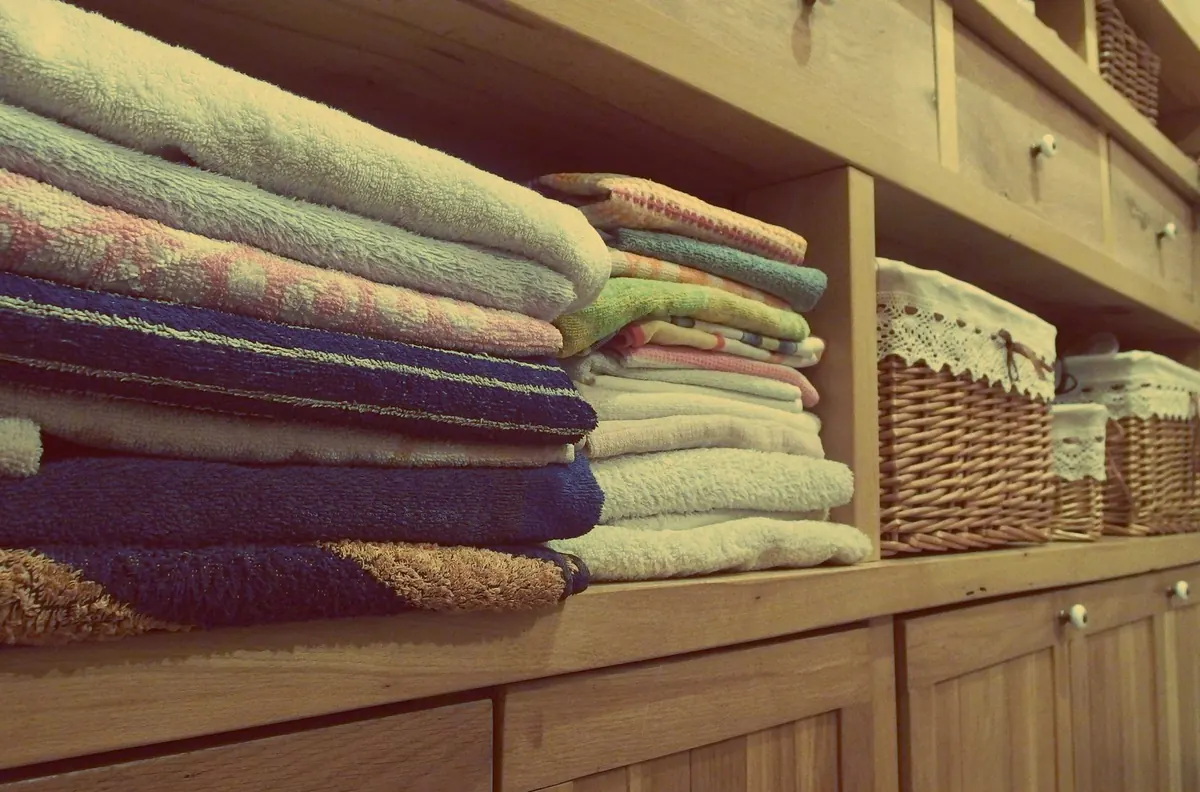
A linen closet fails quietly. Nothing looks wrong until you reach for one pillowcase and half a shelf of towels comes with it. You shove it all back, shut the door, and promise yourself you'll deal with it later. Thirty minutes is enough to fix it properly — not just tidy the pile, but set up a system that holds up for months.
Before You Start the Clock
Gather four things: a laundry basket, a bag for discards, a damp cloth, and something to take notes on. Clear a patch of floor or bed nearby to restack on. Then commit to one rule that makes the whole thing possible: work one shelf at a time. Pulling everything out at once turns a half-hour job into a lost afternoon.
Decide your categories now, before you touch a single towel: bath towels, hand towels and washcloths, sheets sorted by bed size, blankets, and guest spares. If your closet also holds cleaning supplies or medicine, plan to move those out entirely — linens and chemicals don't belong on the same shelves, and anything a child could reach needs a different home. A pharmacist or your doctor can advise on safe storage if you're unsure.
Minutes 0–5: Empty It and Sort Fast
Take everything off the shelves and sort it into piles by category. Then judge each item in about three seconds. That sounds brutal, and it is — it's also the only way to get through the pile without a debate.
- Keep: clean, intact, and actually used. If you can't remember the last time it came off the shelf, it's not a keeper.
- Repurpose: a bleach-faded towel becomes a car-drying rag, a dog towel, or a drop cloth for painting. A flat sheet without its partner works as a dust cover for furniture in storage.
- Retire: anything torn at the hem, mildewed, or worn thin enough to see through. Many animal shelters and vet clinics welcome clean, worn towels, so call ahead before you donate.
This is also the moment to match your sheet sets. Any fitted sheet without a matching flat sheet and pillowcases is an orphan. Pair the sets that belong together and set them aside. If three orphan fitted sheets are the same size and color family, they can live together as backups — otherwise they're just occupying space.
Minutes 5–15: Fold Towels So They Stand Up
The standard towel fold — in half, in half, in half — builds a stack that collapses the moment you touch it. Try the file fold instead. Standed upright, each towel holds its own shape and slides out like a folder from a drawer.
- Lay the towel flat and smooth it with your palm.
- Fold it in half lengthwise, then in half lengthwise again, so you have a long, narrow band.
- Fold the band in thirds crosswise, or in half twice, until the bundle is roughly as tall as your shelf is deep.
- Stand the bundle upright against the shelf wall and repeat, working left to right.
Crisp edges facing out make the shelf read as deliberate rather than dumped. Washcloths are faster rolled into a shallow bin — less folding, and you can see exactly when you're running low. Do the folding on a flat surface, not in midair; half the mess in linen closets comes from folding against the shelf edge.
Minutes 15–23: Bundle the Bedding
Sheets are the part everyone dreads, mostly because a loose fitted sheet refuses to behave. The fix is to stop storing sets as separate pieces and store them as one bundle tucked inside its own pillowcase. Nothing separates, nothing gets lost, and changing the bed takes one grab.
- Fold the fitted sheet as flat as you can, nesting the elastic corners into each other.
- Fold the flat sheet to roughly the same footprint and lay it on top.
- Add one pillowcase to the stack, then fold the whole pile to the width of the second pillowcase.
- Slide the folded stack inside that pillowcase and tuck the open end under itself.
Store one bundle per bed you actually have, plus one spare. If the guest bed left the house years ago, so should the queen set. Blankets and duvets follow the same logic: one in use, one spare, and anything beyond that is a decision you're postponing, not storage.
Minutes 23–27: Zone the Shelves by Reach
Put things back by height and frequency, not by size. Your arms should find what you use weekly without stretching or bending.
- Eye level: bath towels, hand towels, and the sheet bundle for the bed you change most often.
- Waist level or just below: washcloths, guest sets, small items in an open bin.
- Top shelf: light and occasional — extra blankets, beach towels, spare pillows that are clean and dry.
- Floor level: bulky or rarely used items in a lidded bin, since floors collect dust.
Leave about a fifth of the shelf space empty. A closet packed to the ceiling is a closet you'll have to rebuild in six weeks. Wipe each shelf with the damp cloth as it empties, and use open bins for daily items and lidded ones for everything else.
Minutes 27–30: Put It Back and Set Two Rules
Restack, close the door, and write down what you're missing — one spare set of queen sheets, maybe, or more hand towels for the downstairs bath. That note saves you from buying duplicates you don't need. Then set two rules that keep the whole thing from sliding back:
- Nothing goes in unfolded. If it isn't worth thirty seconds, it isn't worth the shelf.
- One in, one out. A new sheet set arrives, an old one leaves the same day.
Tape a short inventory inside the door if your closet serves more than one bed size: king, queen, twin, and how many sets of each. It takes a minute and prevents the slow accumulation of mismatched bedding.
Keeping the Closet Calm After the Reset
The first reset is the slow one. The second takes fifteen minutes, and by the third your hands know the folds without thinking about them. Set a ten-minute recheck at each seasonal change of bedding, and deal with the orphan basket then — single pillowcases, stray shams, the fitted sheet whose partner vanished. Growth in a linen closet is almost always in ones and twos, so catching it early is the entire trick. Thirty minutes now buys you a year of easy mornings and shelves that stay put.
Photo: Pixabay / Pexels